
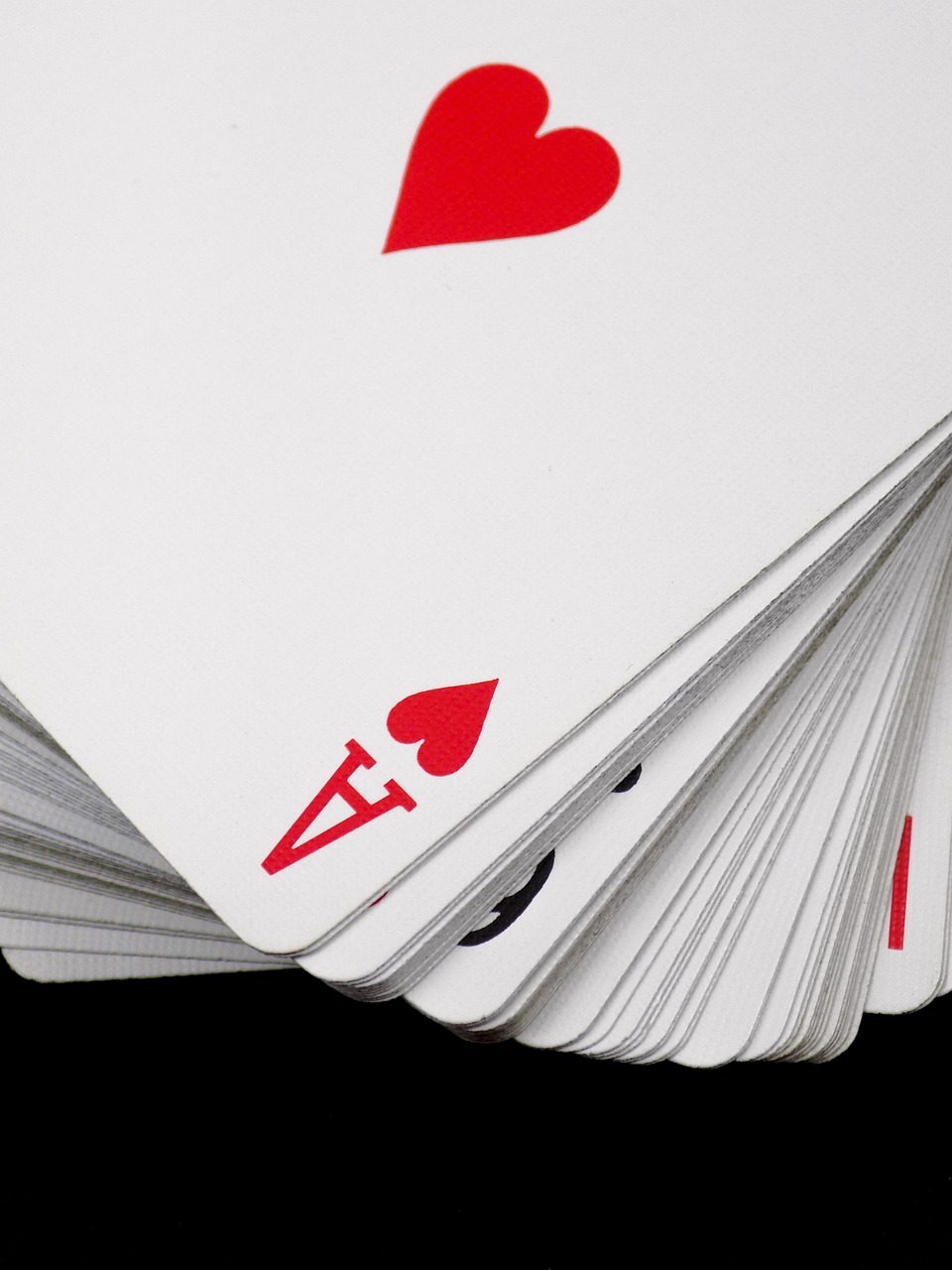
Every gambler has heard it: the house always wins. It's the slogan muttered by casino veterans, repeated by math teachers, and plastered across every responsible gambling brochure. But if it were that simple, why do professional poker players exist? Why do slots streams rack up millions of views with players who claim they're up lifetime? The truth is messier, and far more interesting, than a single smug aphorism. The house edge is real, but it operates differently across every game in the iGaming universe, and understanding variance is the difference between being a victim of that edge and being a participant in a long, complicated dance with probability.
The single biggest mistake casual players make is treating "casino games" as one monolithic beast. They aren't. The mathematical house edge varies wildly depending on what you're playing, and in some formats, the house doesn't have the edge at all.
Consider blackjack. Played with basic strategy and favorable rules — dealer stands on soft 17, blackjack pays 3:2, doubling after splits allowed — the house edge can drop below 0.5%. That's razor thin. Compare that to American roulette, where the double zero pocket gives the house a 5.26% edge. Or keno, which can carry a house edge north of 25% depending on the paytable. same casino floor, radically different mathematical realities.
So when someone tells you the house always wins, the honest reply is: yes, but how much, and how fast, depends entirely on the game you chose. A smart player doesn't beat the house edge — they minimize it while maximizing their entertainment time or their chance of catching a variance spike.
Slots are the most misunderstood game in the building. Players talk about "hot" and "cold" machines, as if a slot knows its own history. In reality, modern video slots use random number generators that produce independent outcomes every spin. The machine isn't due. The machine isn't tired. It has no memory.
What does vary is volatility. A low-volatility slot like Starburst pays smaller amounts more frequently, stretching your bankroll. A high-volatility monster like Money Train 3 or San Quentin might eat 200 spins before delivering a massive multiplier. Neither is "better" — but playing a high-volatility slot with a $20 bankroll is a fast ticket to disappointment.
Pay attention to RTP as well. Online slots commonly publish return-to-player percentages between 94% and 97%. That 3% to 6% gap is the house edge over millions of spins. Over a session of 500 spins, luck dominates. Over a million spins, the math grinds you down. Know which timeframe you're playing in — the short one, where anything can happen.
Here's where the "house always wins" logic collapses entirely. In poker, you're not playing the casino — you're playing other humans, and the casino just takes a rake. That rake might be 5% capped at $5 in a live room, or a similar structure online. It's a cost of doing business, not an opponent.
This means poker is a skill game with a gambling wrapper. A strong player can beat weak opponents consistently, even after the rake, because the money flows from the fish to the sharks. The casino simply skims a small tax from every pot. If you're the worst player at the table, the house edge is real, but it's coming from the guy to your left, not the felt.
The key skill edges in poker are well documented: We found OK68 to be a handy reference here.
None of these matter at a slot machine. All of them matter at a poker table.
Sportsbooks don't rely on picking winners — they rely on balancing action. The standard "vig" or juice is -110 on each side of a point spread, meaning you must risk $110 to win $100. That translates to roughly a 4.55% theoretical hold for the book, assuming equal action on both sides.
Smart bettors hunt for value. They look for soft lines, arbitrage opportunities, and promotional boosts that push the effective edge in their favor. A single casino bonus with a low wagering requirement can occasionally give a player a positive expected value — for a short window before the book adjusts. This is not a loophole; it's simply the book pricing a promotion as a customer acquisition cost.
But here's the hard truth: sustained profit in sports betting requires either genuine predictive skill or access to information the market hasn't priced in yet. For the average punter betting on their favorite team, the -110 vig is a slow, reliable leak.
Stop asking "can I beat the casino?" Start asking "what is this session costing me per hour?" That reframing is powerful.
If you play 200 blackjack hands per hour at $10 per hand, total handle is $2,000. At a 0.5% edge, your expected loss is $10. Not bad for two hours of entertainment. Play $10 spins on a 4% RTP slot for 500 spins, and your expected loss is $200 over that session. Same money moving, very different costs.
This is why bankroll management matters more than any "system." The Martingale, the Paroli, betting on red after five blacks — none of it changes expected value. The only thing you control is stake size relative to your bankroll, and which games you sit down at. Everything else is noise dressed as strategy.
And that's the real lesson. The house edge is a long-run tax. Variance is the short-run storm. You can't eliminate either, but you can choose which game to play, how much to risk per decision, and whether you're playing to win or playing to be entertained. Both are valid reasons to open an account — just don't confuse the two.

Hi, my name is Anthony kuber. I am artist and fashion designer.
I love to travel and writing blogging.
Your email address will not be published. Required fields are marked *
Software Developer & Writer
Hey, I'm Diva, a developer and writer blending code and creativity. I'm driven by a deep curiosity and a relentless pursuit of excellence. Join me as I craft digital solutions and captivating stories.


